

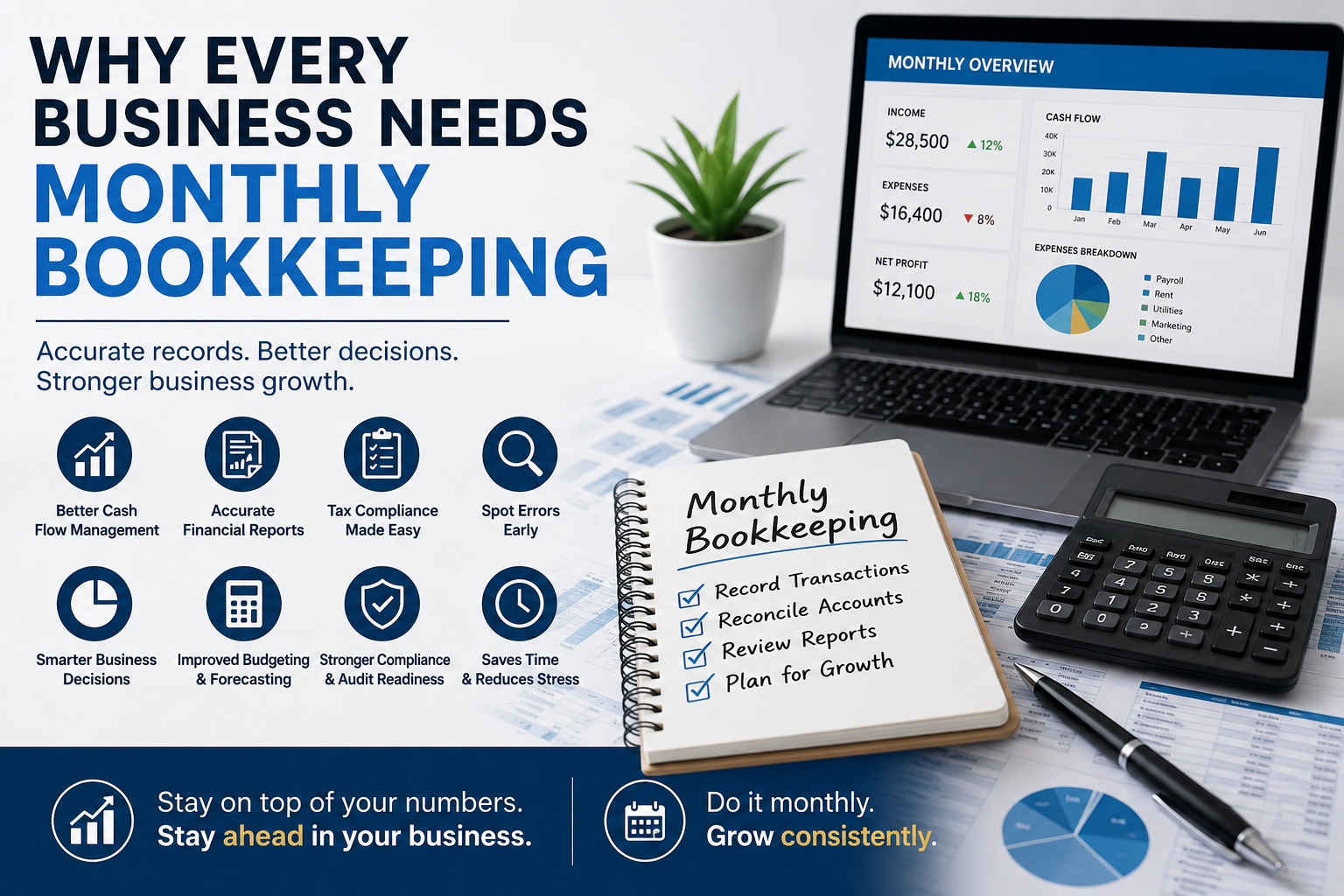

Running a business involves much more than making sales and serving customers. Every financial transaction—whether it's a customer payment, supplier invoice, payroll expense, or operating cost—needs to be recorded accurately. This is where monthly bookkeeping becomes essential.
Many business owners only review their finances at tax time. However, waiting until the end of the financial year can lead to missed deductions, cash flow issues, inaccurate financial reports, and compliance risks. Maintaining your books every month gives you a clear picture of your business's financial health and helps you make informed decisions throughout the year.
What Is Monthly Bookkeeping?
Monthly bookkeeping is the process of recording, organizing, and reconciling all financial transactions on a monthly basis. It ensures that your accounting records are accurate, complete, and up to date.
Typical monthly bookkeeping tasks include:
- Recording sales and expenses
- Reconciling bank and credit card accounts
- Managing accounts payable and receivable
- Processing payroll entries
- Reviewing cash flow
- Preparing monthly financial reports
- Identifying discrepancies before they become larger issues
Keeping these tasks current allows business owners to focus on growth rather than catching up on months of financial records.
Why Monthly Bookkeeping Matters
1. Better Cash Flow Management
Cash flow is the lifeblood of any business. Monthly bookkeeping helps you understand where your money is coming from and where it is being spent.
With accurate records, you can:
- Monitor incoming and outgoing cash
- Identify unnecessary expenses
- Plan future investments
- Avoid cash shortages
Having a clear understanding of your cash position enables you to make confident financial decisions.
2. Accurate Financial Reporting
Reliable financial reports are only possible when your bookkeeping is up to date.
Monthly bookkeeping helps generate:
- Profit & Loss Statements
- Balance Sheets
- Cash Flow Statements
These reports provide valuable insights into business performance and support strategic planning.
3. Easier Tax Compliance
No business owner enjoys scrambling through receipts when tax deadlines approach.
Monthly bookkeeping ensures:
- Income and expenses are properly recorded
- Tax deductions are easier to identify
- Financial records are readily available
- Tax filings become faster and more accurate
Staying organized throughout the year significantly reduces stress during tax season.
4. Better Business Decisions
Successful decisions depend on accurate financial information.
Monthly bookkeeping allows you to:
- Identify profitable products or services
- Track business growth
- Monitor operating costs
- Set realistic budgets
- Plan future expansion
Instead of relying on assumptions, you can make decisions backed by real financial data.
5. Improved Budgeting and Forecasting
A business cannot grow without planning.
Accurate monthly financial records help you:
- Prepare realistic budgets
- Forecast future revenue
- Estimate upcoming expenses
- Allocate resources efficiently
This makes long-term business planning more reliable.
6. Detect Errors Early
Mistakes happen in every business. Small accounting errors can become expensive if left unnoticed.
Monthly bookkeeping helps identify:
- Duplicate transactions
- Missing invoices
- Bank reconciliation differences
- Incorrect expense classifications
- Unauthorized transactions
Early detection saves both time and money.
7. Stronger Relationships with Investors and Lenders
If you're applying for a loan or seeking investors, accurate financial records are essential.
Well-maintained books demonstrate:
- Financial discipline
- Business stability
- Transparent reporting
- Better financial management
This increases confidence among banks, investors, and other stakeholders.
8. Saves Time and Reduces Stress
Trying to organize months of financial records at year-end can be overwhelming.
Monthly bookkeeping spreads the workload evenly throughout the year, making financial management more efficient and reducing last-minute pressure.
Should You Handle Bookkeeping In-House or Outsource It?
Many growing businesses choose to outsource bookkeeping to experienced professionals. Outsourcing provides access to skilled accountants, modern accounting software, and established processes without the cost of hiring a full-time in-house team.
It also allows business owners to spend more time focusing on customer service, business development, and strategic growth while ensuring their financial records remain accurate and compliant.
Final Thoughts
Monthly bookkeeping is not just an accounting task—it's a valuable business management tool. It provides accurate financial information, improves cash flow, supports tax compliance, and enables smarter business decisions.
Whether you're a startup, a small business, or an established company, maintaining your books every month can save time, reduce financial risks, and help your business grow with confidence.
Investing in consistent monthly bookkeeping today can prevent costly mistakes tomorrow and give you the financial clarity needed to achieve your business goals.