

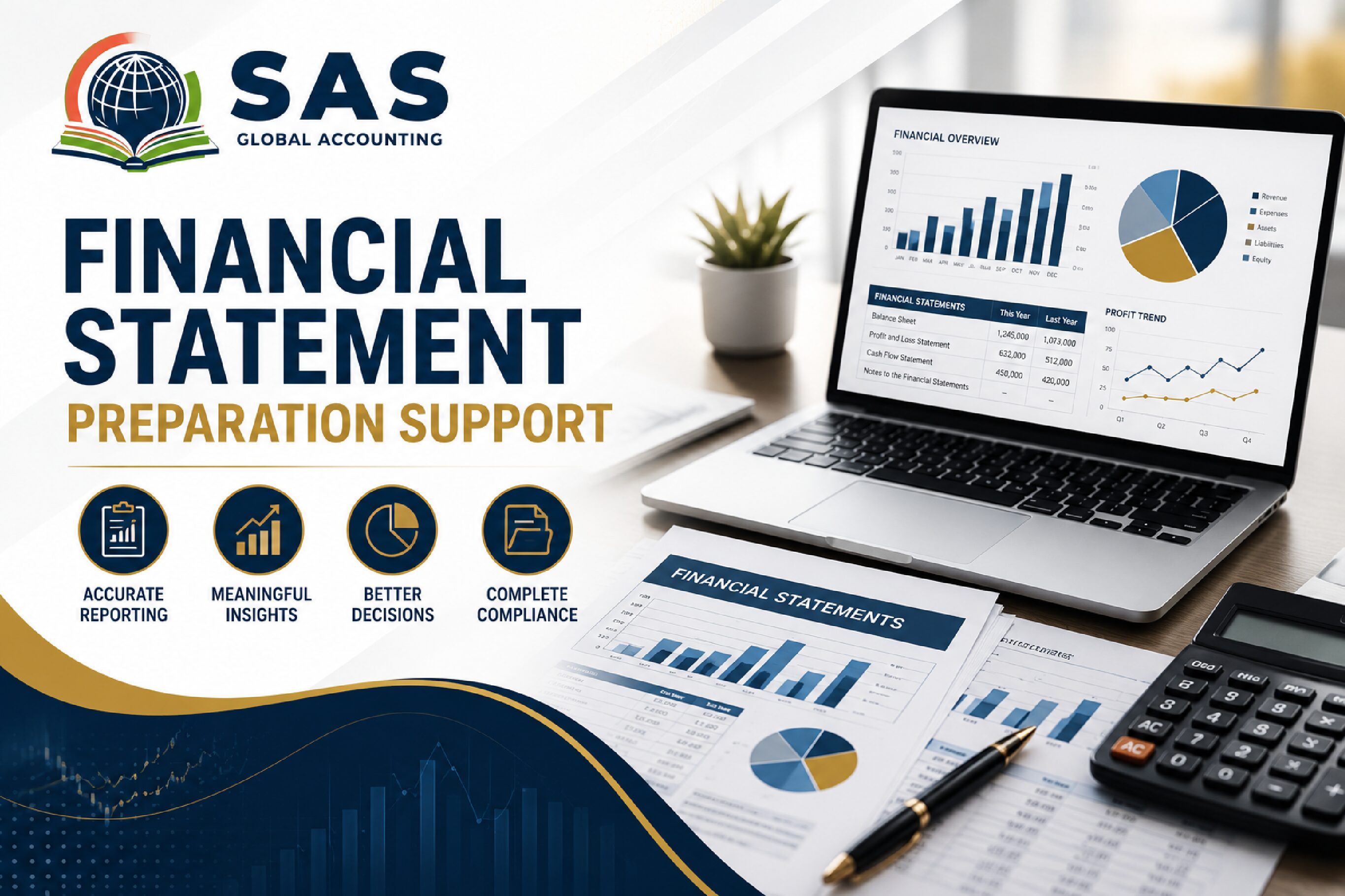

Financial statements are among the most important reports prepared by an accounting firm. They provide a clear picture of a business's financial performance and position, helping business owners, investors, lenders, and regulatory authorities make informed decisions. For UK accounting firms, preparing accurate financial statements is essential to maintaining compliance with accounting standards and delivering value to clients.
What is Financial Statement Preparation?
Financial statement preparation is the process of organizing accounting records and converting them into structured financial reports. These reports summarize a company's financial activities over a specific period and help stakeholders understand how the business is performing.
The primary financial statements include:
- Balance Sheet – Shows the company's assets, liabilities, and equity at a specific date.
- Profit and Loss Statement (Income Statement) – Summarizes income, expenses, and profit or loss for the accounting period.
- Cash Flow Statement – Explains how cash moves into and out of the business through operating, investing, and financing activities.
- Notes to the Financial Statements – Provide additional explanations and disclosures to support the figures presented in the financial statements.
Why Are Financial Statements Important?
Financial statements play a significant role in business management and regulatory compliance. They help businesses:
- Evaluate financial performance.
- Measure profitability.
- Monitor cash flow.
- Assess financial stability.
- Support business planning and decision-making.
- Meet statutory reporting requirements.
- Build confidence among investors, lenders, and other stakeholders.
The Financial Statement Preparation Process
Preparing financial statements generally involves several steps:
- Recording all business transactions accurately.
- Reconciling bank accounts and other ledger balances.
- Posting year-end adjustments such as depreciation, accruals, and prepayments.
- Reviewing trial balances for accuracy.
- Preparing the Balance Sheet, Profit and Loss Statement, and Cash Flow Statement.
- Drafting the required notes and disclosures.
- Reviewing the financial statements before finalization.
Each step contributes to ensuring that the financial reports present a true and fair view of the company's financial position.
Common Challenges
Accounting firms often face challenges during financial statement preparation, such as:
- Large volumes of financial data.
- Tight reporting deadlines.
- Complex accounting adjustments.
- Maintaining consistency across multiple client engagements.
- Ensuring compliance with accounting standards.
- Minimizing errors and omissions.
Using standardized processes and thorough review procedures helps improve the quality and reliability of financial reports.
Best Practices
To prepare high-quality financial statements, accounting professionals should:
- Maintain accurate bookkeeping throughout the year.
- Perform regular reconciliations.
- Keep supporting documentation organized.
- Review all adjustments carefully.
- Follow applicable accounting standards.
- Conduct quality checks before issuing final reports.
Conclusion
Financial statement preparation is a fundamental part of the accounting process. Accurate financial statements help businesses understand their financial position, comply with reporting requirements, and make informed decisions. Whether prepared for statutory reporting, internal management, or external stakeholders, well-prepared financial statements contribute to transparency, accountability, and better financial management.
This understanding of the financial statement preparation process enables accounting professionals and business owners to appreciate the importance of accurate financial reporting and its role in supporting business success.