

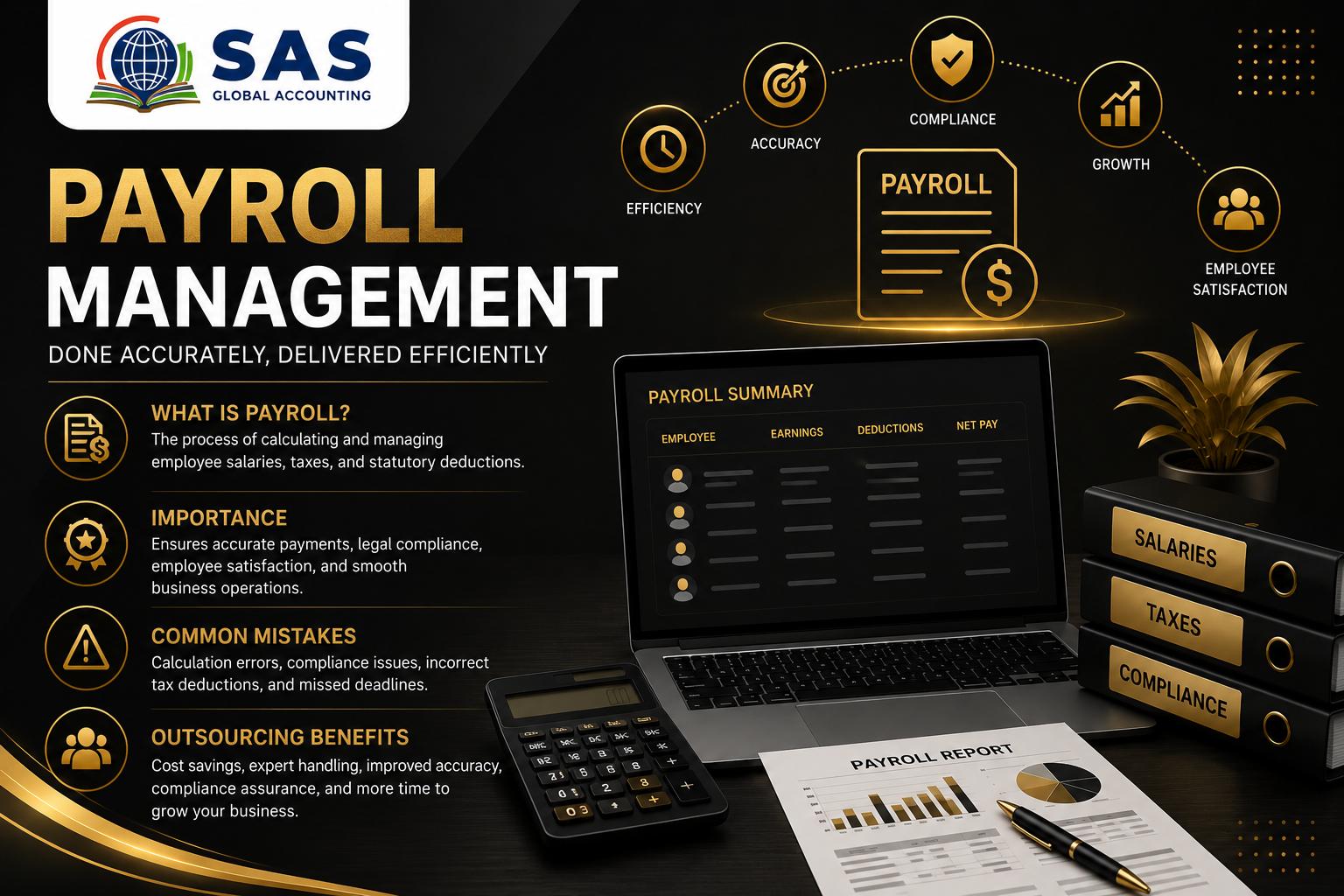

Payroll is one of the most important functions in any business. It ensures employees are paid accurately and on time while helping businesses comply with tax laws, labor regulations, and statutory requirements. Despite its importance, payroll management can be time-consuming and complex, especially as a business grows.
Errors in payroll processing can result in employee dissatisfaction, financial penalties, compliance issues, and damage to a company's reputation. This is why many businesses are now choosing to outsource payroll management to experienced professionals.
In this guide, we will explain what payroll management is, why it matters, common payroll mistakes businesses make, and the benefits of outsourcing payroll services.
What Is Payroll Management?
Payroll management is the process of calculating employee salaries, wages, bonuses, incentives, overtime, deductions, taxes, and other statutory contributions before making salary payments.
It also includes maintaining payroll records, issuing payslips, complying with employment laws, and filing payroll-related taxes with the relevant authorities.
A typical payroll process includes:
- Recording employee attendance and working hours
- Calculating gross salary
- Deducting taxes and statutory contributions
- Processing reimbursements and bonuses
- Generating payslips
- Transferring salaries
- Filing payroll taxes and maintaining compliance
- Preparing payroll reports
An effective payroll system ensures employees receive the correct salary on time while reducing compliance risks for the business.
Why Payroll Management Is Important
1. Ensures Employees Are Paid Accurately
Employees rely on timely and accurate salary payments. Payroll errors can reduce employee trust and affect workplace morale.
2. Maintains Legal Compliance
Payroll must comply with applicable tax regulations, labor laws, and statutory reporting requirements. Non-compliance can lead to penalties and legal complications.
3. Improves Employee Satisfaction
Timely salary payments, accurate deductions, and transparent payslips contribute to a positive employee experience.
4. Supports Financial Planning
Payroll is often one of the largest business expenses. Accurate payroll data helps management forecast costs and manage cash flow effectively.
5. Protects Business Reputation
Consistent payroll processing builds trust among employees, regulators, and business partners.
Common Payroll Mistakes Businesses Make
Even experienced businesses can encounter payroll errors. Some of the most common include:
1. Incorrect Employee Classification
Misclassifying employees or contractors can create tax and legal issues.
2. Payroll Calculation Errors
Mistakes in overtime, bonuses, deductions, or salary calculations may lead to underpayments or overpayments.
3. Missing Payroll Deadlines
Late salary payments or delayed payroll tax filings can result in penalties and employee dissatisfaction.
4. Poor Record Keeping
Incomplete payroll records make audits, reporting, and compliance more difficult.
5. Ignoring Regulatory Changes
Payroll regulations change frequently. Failing to stay updated can expose businesses to compliance risks.
6. Incorrect Tax Deductions
Errors in tax calculations may lead to penalties and additional liabilities.
7. Manual Payroll Processing
Manual spreadsheets increase the likelihood of calculation errors and consume valuable administrative time.
Benefits of Outsourcing Payroll Services
Many businesses outsource payroll to improve efficiency, reduce risks, and save time.
1. Improved Accuracy
Professional payroll providers use standardized processes and technology to minimize errors.
2. Better Compliance
Payroll specialists stay updated with changing tax laws and employment regulations, helping businesses remain compliant.
3. Time Savings
Outsourcing eliminates repetitive administrative work, allowing management to focus on strategic business activities.
4. Cost Efficiency
Maintaining an in-house payroll team requires investment in software, training, and dedicated staff. Outsourcing often provides a more cost-effective solution.
5. Data Security
Professional payroll providers implement secure systems and confidentiality measures to protect sensitive employee information.
6. Scalability
As businesses grow, outsourced payroll services can easily accommodate new employees and changing payroll requirements.
7. Access to Payroll Experts
Businesses benefit from experienced professionals who understand payroll regulations, tax requirements, and best practices.
Signs Your Business Should Consider Payroll Outsourcing
You may benefit from payroll outsourcing if:
- Payroll processing consumes too much management time.
- Payroll errors occur frequently.
- Your workforce is growing rapidly.
- Compliance requirements have become more complex.
- You operate across multiple locations or jurisdictions.
- Your internal team struggles to manage payroll efficiently.
Best Practices for Effective Payroll Management
To maintain an efficient payroll process:
- Keep employee records updated.
- Use reliable payroll software.
- Review payroll calculations before processing.
- Maintain detailed payroll documentation.
- Stay informed about regulatory changes.
- Conduct regular payroll audits.
- Consider outsourcing payroll to experienced professionals.
Conclusion
Payroll management is more than simply paying employees—it is a critical business function that supports compliance, employee satisfaction, financial planning, and operational efficiency. Even minor payroll mistakes can have significant financial and legal consequences.
By implementing strong payroll processes and considering professional payroll outsourcing, businesses can reduce administrative burdens, improve accuracy, strengthen compliance, and focus on their core operations with greater confidence.