

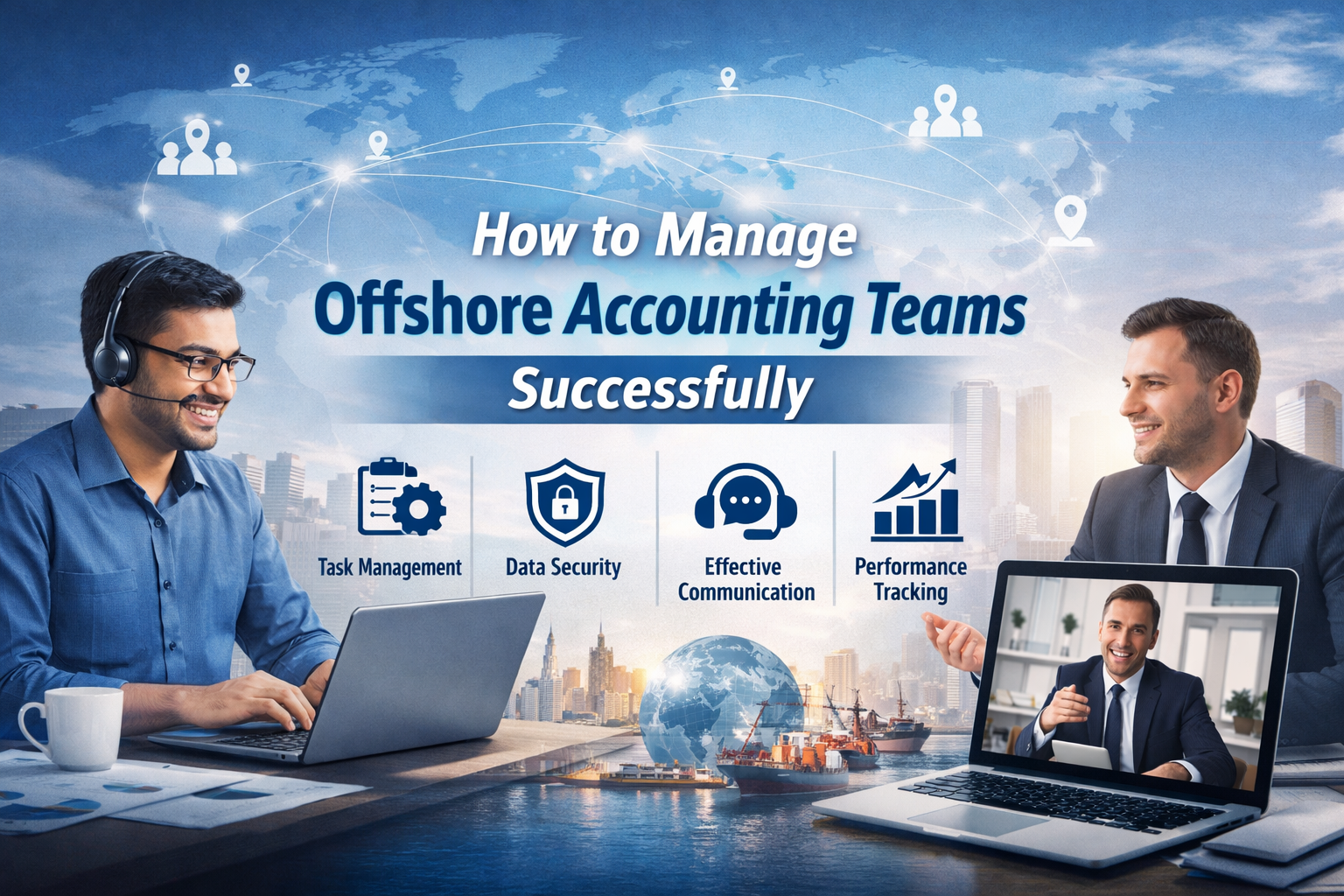

Offshore accounting teams have become an essential part of modern accounting firms and businesses. By outsourcing bookkeeping, taxation, payroll, and compliance work to skilled professionals in countries like India, firms can reduce costs and increase efficiency. However, managing an offshore accounting team requires the right structure, communication, and leadership to ensure high-quality results.
This guide will help you understand how to manage offshore accounting teams smoothly and successfully.
1. Set Clear Roles and Responsibilities
The first step in managing an offshore team is defining who does what. Every accountant, bookkeeper, and reviewer should know their exact responsibilities.
Create:
-
Task lists for each role
-
Deadlines and priorities
-
Standard operating procedures (SOPs)
When expectations are clear, your offshore team can work more confidently and accurately.
2. Use the Right Communication Tools
Communication is the backbone of offshore team management. Use tools such as:
-
Zoom or Google Meet for meetings
-
Slack or Microsoft Teams for daily communication
-
Email for formal instructions
-
Project management tools like Trello, Asana, or ClickUp
Schedule regular calls to discuss work progress, resolve doubts, and give feedback.
3. Follow a Structured Workflow
A well-defined workflow helps avoid confusion and delays. Assign tasks, track progress, and review completed work before delivery.
Your workflow should include:
-
Task assignment
-
Work submission
-
Quality review
-
Client delivery
This ensures accuracy and accountability.
4. Maintain Data Security
Since accounting involves sensitive financial data, security is critical. Use:
-
Encrypted file-sharing platforms
-
Secure cloud accounting software
-
Strong password policies
-
Restricted data access
Always make sure your offshore team follows confidentiality agreements and compliance standards.
5. Provide Regular Training
Accounting rules, tax laws, and software keep changing. Keep your offshore team updated by providing:
-
Training on accounting software
-
Updates on tax and compliance rules
-
Process improvement sessions
A trained team produces better results and reduces errors.
6. Monitor Performance and Quality
Track performance using:
-
Accuracy levels
-
Turnaround time
-
Client satisfaction
-
Task completion rate
Regular reviews help identify strengths and areas for improvement.
7. Build a Strong Team Culture
Even if your team is offshore, make them feel like part of your company. Appreciate good work, communicate respectfully, and maintain transparency.
A motivated team delivers higher quality and stays loyal to your firm.
Conclusion
Managing offshore accounting teams becomes easy when you have clear processes, strong communication, and a focus on quality and security. With the right management approach, offshore teams can help your accounting firm grow faster, reduce costs, and serve clients better.
Whether you are a CA firm, CPA firm, or accounting service provider, offshore accounting can be your key to long-term success.